Residential properties near heavy canopy cover in Wawaset Park, the Highlands, and South Brandywine face sustained tick pressure from white-tailed deer and rodent reservoirs moving through the Brandywine Creek…
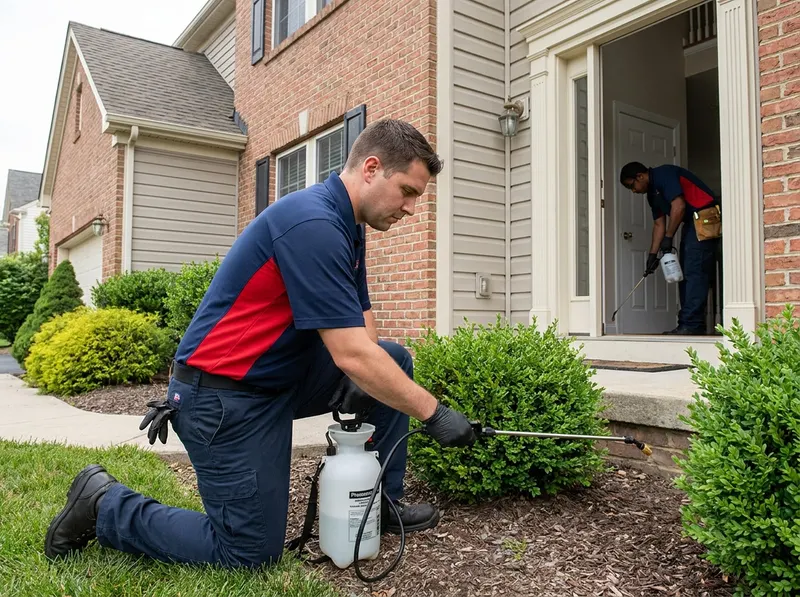
Residential properties near heavy canopy cover in Wawaset Park, the Highlands, and South Brandywine face sustained tick pressure from white-tailed deer and rodent reservoirs moving through the Brandywine Creek corridor. Fleas routinely establish inside row homes and detached houses in Trolley Square, Forty Acres, and Baynard Village after domestic pets carry hitchhiking adults indoors. A continuous dual-zone treatment solves this cycle: exterior liquid residual applications interrupt questing ticks along turf margins and perimeter ground cover, while interior applications introduce targeted insect growth regulators (IGRs) directly into rug underlayments, floorboard expansion gaps, and baseboards to halt embryonic development.
Interior treatments focus on disruption of the 21-day flea development cycle. Flea pupae reside in silk cocoons that resist standard surface sprays; therefore, an application must pair a fast-acting adulticide with a pyriproxyfen- or novaluron-based juvenile hormone mimic. This technical binding arrests the emergence of biting adults. The trade-off between interior spot-treatments and full-floor broadcast applications centers on indoor preparation: full-floor treatments require complete vacuuming and clearance of all floor surfaces prior to application, whereas partial spot-treatments leave untreated microclimates where dormant pupae can emerge 14 days later.
Exterior barrier treatments create an immediate structural buffer zone. Applications coat foundation masonry 3 feet upward from the groundline and extend outward across a 6- to 10-foot perimeter swath, focusing heavily on shade margins, woodpiles, and damp soil pockets common in mature neighborhoods like Quaker Hill and Cool Spring. Properties adjoining dense park foliage require high-pressure mechanical foliar treatments reaching the undersides of low-hanging deciduous shrubs where questing ticks congregate. A single-barrier exterior application rarely resolves an interior infestation if domestic animals already host reproducing parasites; likewise, treating the interior without securing the property boundary invites re-infestation within 48 to 72 hours.
Every job gets a firm, written price after a free on-site visit.
Tell us about your flea and tick exterior-interior control job in Wilmington and we'll send a clear, written quote, usually the same day.
 Calviro Pest Defense